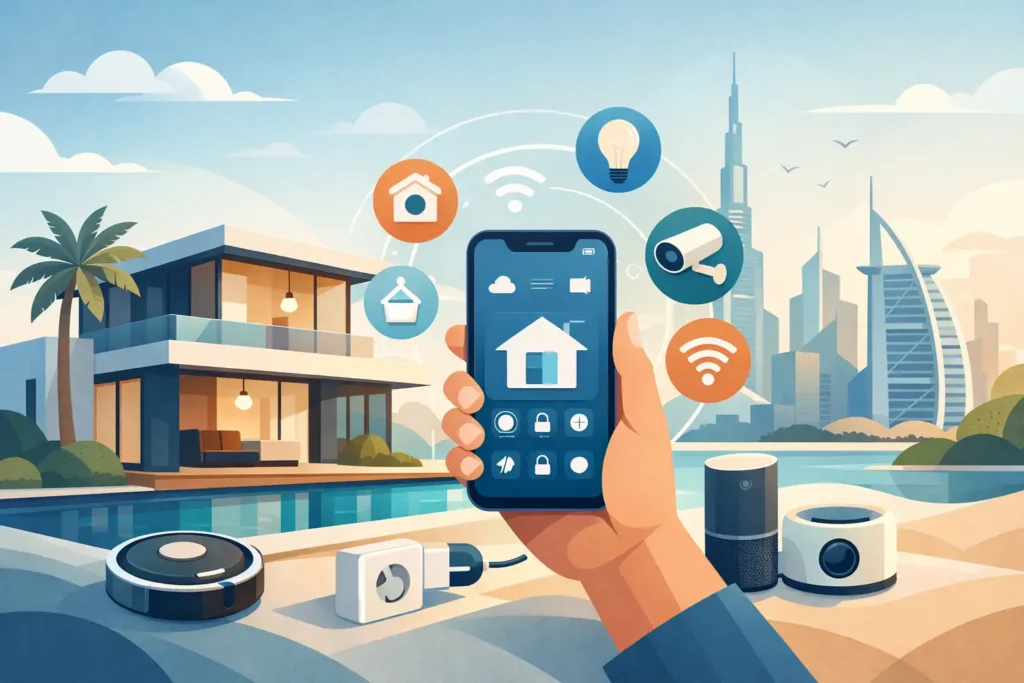
A villa should not require a different app, remote, or wall switch for every room. Done properly, smart home automation Dubai homeowners use should make arriving home simpler, securing the property clearer, and everyday systems easier to manage – without making the home dependent on fragile technology.
For villas and high-value residences across Arabian Ranches, Emirates Living, Jumeirah Park, Jumeirah Islands, Damac Hills, and Dubai Hills, the difference is rarely the number of devices installed. It is the quality of the design behind them. Lighting, climate control, shading, audio, WiFi, cameras, access control, and entertainment need to operate as one considered environment, supported by a network built to carry the load.
What Smart Home Automation Should Solve
The most useful automation begins with routines, not products. A homeowner may want exterior lights and selected indoor zones to switch on at sunset, cooling adjusted before the family returns, and gates, doors, and cameras checked from one secure interface. Another household may prioritize discreet security controls while traveling, with immediate notifications for unusual activity and simple remote access for staff or visitors.
These are practical requirements. Automation should reduce repeated actions while leaving occupants in control. A physical keypad should still work when a phone is not nearby. Essential lighting should remain usable during an internet interruption. Security alerts should be meaningful rather than constant notifications that are eventually ignored.
For larger homes, central control also reduces confusion for family members, guests, and household staff. Instead of explaining which remote controls a room or how to operate the gate, the system can present clear, consistent controls. A well-planned interface is not a display of technology. It is a dependable way to run the home.
Smart Home Automation Dubai Requires Local Planning
Dubai homes place particular demands on connected systems. High outdoor temperatures, large glazed areas, multiple floors, detached guest spaces, garden zones, pool equipment, and thick construction materials can all affect how technology performs. A solution designed around a standard apartment layout may be unsuitable for a large villa.
Climate automation is a good example. It is not simply a matter of putting smart thermostats on the wall. The system must work with the existing HVAC configuration, zoning, occupancy patterns, and the property’s ability to retain cooling. In some homes, room-by-room control offers real comfort and energy benefits. In others, it can create unnecessary complexity or conflict with the installed AC controls. A site assessment should establish what is possible before equipment is selected.
The same is true for wireless coverage. WiFi is the foundation for many connected devices, but it should not be treated as an afterthought. Coverage must extend reliably to bedrooms, offices, outdoor living areas, gates, and service quarters where required. A professional network design considers access point placement, wired backhaul, interference, segmentation, and future capacity. Simply adding more consumer-grade routers often creates inconsistent coverage and harder-to-trace problems.
Wired Where It Matters, Wireless Where It Helps
Wireless devices are convenient and can be appropriate for selected controls, sensors, and retrofit projects. However, systems that manage critical functions benefit from reliable wired infrastructure where practical. Wired cameras, access points, racks, controllers, and core security equipment generally provide more stable performance and avoid dependence on battery replacement.
This does not mean every device must be wired. The right balance depends on whether the property is under construction, being renovated, or already occupied. During a new build or major renovation, structured cabling creates options that are difficult and expensive to add later. In an occupied villa, a carefully designed wireless approach may minimize disruption while still delivering meaningful control.
Start With Scenes That Match Real Life
A smart home becomes valuable when it reflects how residents actually use the property. Rather than creating dozens of features at once, begin with a small set of scenes that remove daily friction.
A “Good Morning” scene might raise shades, set comfortable lighting in kitchen areas, and adjust the temperature in occupied rooms. “Away” can turn off selected lights and entertainment systems, close motorized shades, and place the home into an agreed security mode. “Evening” may activate pathway and garden lighting, set the desired living-area mood, and prepare media equipment for use.
The best scenes are specific enough to help, but not so rigid that they become inconvenient. For example, automatically switching off all lights at a fixed time may frustrate someone working late. Occupancy sensors, manual overrides, and sensible timing rules help automation serve the household rather than dictate behavior.
Lighting control is often the most immediately noticeable improvement. It can combine dimming, preset scenes, occupancy response, and scheduled exterior lighting while preserving a clean wall aesthetic. Motorized shades can support comfort and privacy, particularly in rooms exposed to intense afternoon sun. Yet both systems should be selected with maintenance and long-term availability in mind. Specialty components that cannot be supported locally can turn a small fault into an extended inconvenience.
Security Must Be Integrated, Not Added Later
Security is stronger when it is part of the overall design. Cameras, video intercoms, smart locks, perimeter sensors, gate access, and alarm systems should complement one another while protecting the homeowner’s privacy. A video doorbell is useful, for example, but its value increases when it works with entry access, notification rules, and dependable network coverage at the gate.
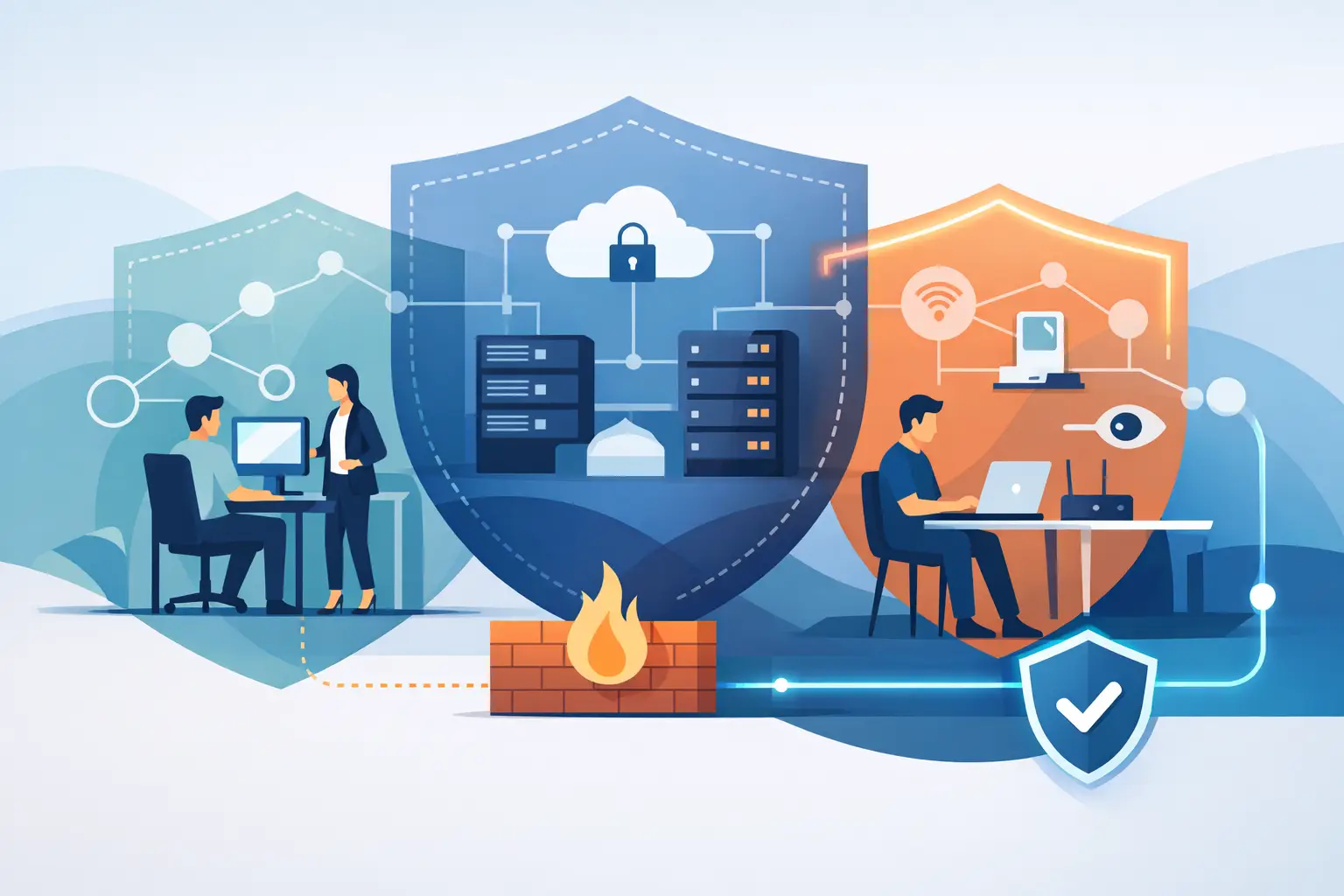
Remote access needs the same careful approach. Convenience should never require exposing home systems to unnecessary risk. Secure account setup, strong passwords, multi-factor authentication where available, appropriate network separation, regular software updates, and controlled installer access all matter. Cameras and smart devices should not sit carelessly on the same network as personal laptops, work devices, or confidential data.
For homeowners who travel frequently, the goal is confidence rather than constant monitoring. Well-configured alerts can distinguish between a normal door opening during approved staff hours and activity that deserves immediate attention. The system should also provide a clear response path: who receives the alert, what they can verify remotely, and when an onsite service visit is needed.
Build a System That Can Change With the Property
Many homes evolve. A spare room becomes an office, a garden gains an outdoor kitchen, a new EV charger is installed, or a family decides to add a cinema room. Automation should have room to grow without requiring a complete replacement.
That is why infrastructure decisions matter early. Adequate equipment-rack space, labeled cabling, power protection, network capacity, and documented configurations make later expansion more straightforward. Open integration options can also be valuable, but compatibility should be verified rather than assumed. Not every smart device works reliably with every platform, and low-cost devices may lose manufacturer support sooner than expected.
There is also a sensible boundary between useful automation and unnecessary automation. Automating a feature that is rarely used can add cost, support requirements, and points of failure without improving daily life. A qualified provider should be willing to say when a simpler solution is the better one.
Installation Is Only the Beginning
The quality of the handover often determines whether homeowners enjoy their system months later. Controls should be tested in normal use, key scenes adjusted with the residents present, and the network checked under realistic demand. Homeowners and household staff need straightforward guidance on common tasks, including what to do if power or connectivity is interrupted.
Ongoing support is equally important. Software updates, device health checks, network monitoring, and responsive troubleshooting protect the investment after installation. INSOURCE UAE approaches smart home projects as part of a wider technology environment, bringing automation, secure connectivity, infrastructure, and ongoing technical support under one accountable team.
Before committing to a system, ask how it will be documented, who supports it after handover, how quickly faults can be diagnosed, and whether future additions can be accommodated. These questions are often more valuable than comparing feature lists.
A smart home should feel calm, not complicated. When controls are intuitive, connectivity is stable, security is thoughtfully configured, and support is available when it is needed, the technology stays in the background – exactly where it belongs.