A poor call at the wrong moment can cost more than a missed conversation. It can delay a customer decision, disrupt field coordination, or leave a team unable to respond during an outage. A properly planned IP phone system installation gives a business more than desk phones: it creates a dependable communications environment that can grow, stay secure, and remain manageable.
For offices in Dubai and across the UAE, the right approach starts before equipment is ordered. Voice quality depends on the network, internet connection, power protection, configuration standards, and ongoing support behind the handsets. Treating telephony as an isolated purchase often creates avoidable call quality issues and difficult support situations later.
What an IP phone system installation should achieve
IP telephony carries voice calls across an internet protocol network rather than traditional analog phone lines. This allows organizations to connect desk phones, mobile applications, conference devices, remote workers, call queues, voicemail, and business systems through a central platform.
The business value is clear when the system is designed around daily operations. Reception teams can route calls quickly. Sales teams can answer from a mobile device without exposing personal numbers. Managers can monitor call flow and adjust coverage. Employees moving between locations can retain their extension and calling features.
However, flexibility should not be confused with simplicity. A small office with a single internet circuit has different needs from a multi-floor organization, a warehouse operation, or a business with remote staff in several countries. The installation must reflect call volumes, working patterns, security requirements, and the level of continuity the organization expects.
Start with a communications and network assessment
The strongest installations begin with discovery. Before selecting a PBX platform, SIP service, or phone model, the technical team should understand how calls move through the business.
This means identifying the number of users, current and expected call volumes, departments, office locations, remote employees, and existing phone numbers to be retained. It also means defining practical call flows: who answers an incoming call, where calls go after hours, when an escalation is needed, and what happens if a user is unavailable.
Network readiness deserves the same attention. Voice traffic is sensitive to delay, packet loss, and jitter. An office may have fast internet for browsing and cloud applications while still delivering inconsistent calls if network traffic is not prioritized correctly. A site assessment should review switching capacity, WiFi coverage where wireless handsets are used, router and firewall settings, VLAN design, bandwidth, and the stability of the internet service.
Power is another operational consideration. IP phones, switches, and internet equipment require power to operate. Power over Ethernet can simplify desk deployment, but the network cabinet should also have suitable uninterruptible power protection. If continuity is essential, teams should plan for internet failover, backup power, or call forwarding to mobile devices during a local outage.
Design the system around real call handling
A phone system should make it easier for customers to reach the right person, not create a menu that sends them in circles. During the design stage, each department needs a clear and practical call route.
A professional services office may need a receptionist, departmental groups, executive assistants, and discreet escalation paths. A sales-focused business may prioritize queue visibility, call recording policies, and integration with customer relationship management tools. A property management team may need after-hours emergency routing that reaches an on-call engineer without publishing a personal mobile number.
The system design should address extensions, direct numbers, ring groups, auto attendants, voicemail rules, business hours, holiday schedules, call transfer behavior, and reporting needs. These decisions are not minor configuration details. They define the customer experience and determine whether employees can respond efficiently during busy periods.
There is also a balance to strike with features. Many platforms offer video calling, presence, analytics, recording, wallboards, and integrations. These can be valuable, but only when they support an identified workflow. Paying for features no one uses adds complexity without improving service.
Selecting phones and deployment options
Not every user needs the same device. Reception and executive support teams may benefit from larger displays, multiple line keys, expansion modules, and wired headsets. Standard office users may only require a reliable desk phone and voicemail. Hybrid employees may work more effectively with a softphone application and a quality USB or Bluetooth headset.
For common areas, consider lobby phones, conference phones, paging adapters, or cordless DECT handsets for staff who move around a site. The right mix keeps costs aligned with usage while maintaining a consistent experience for callers and employees.
Protect voice traffic and customer information
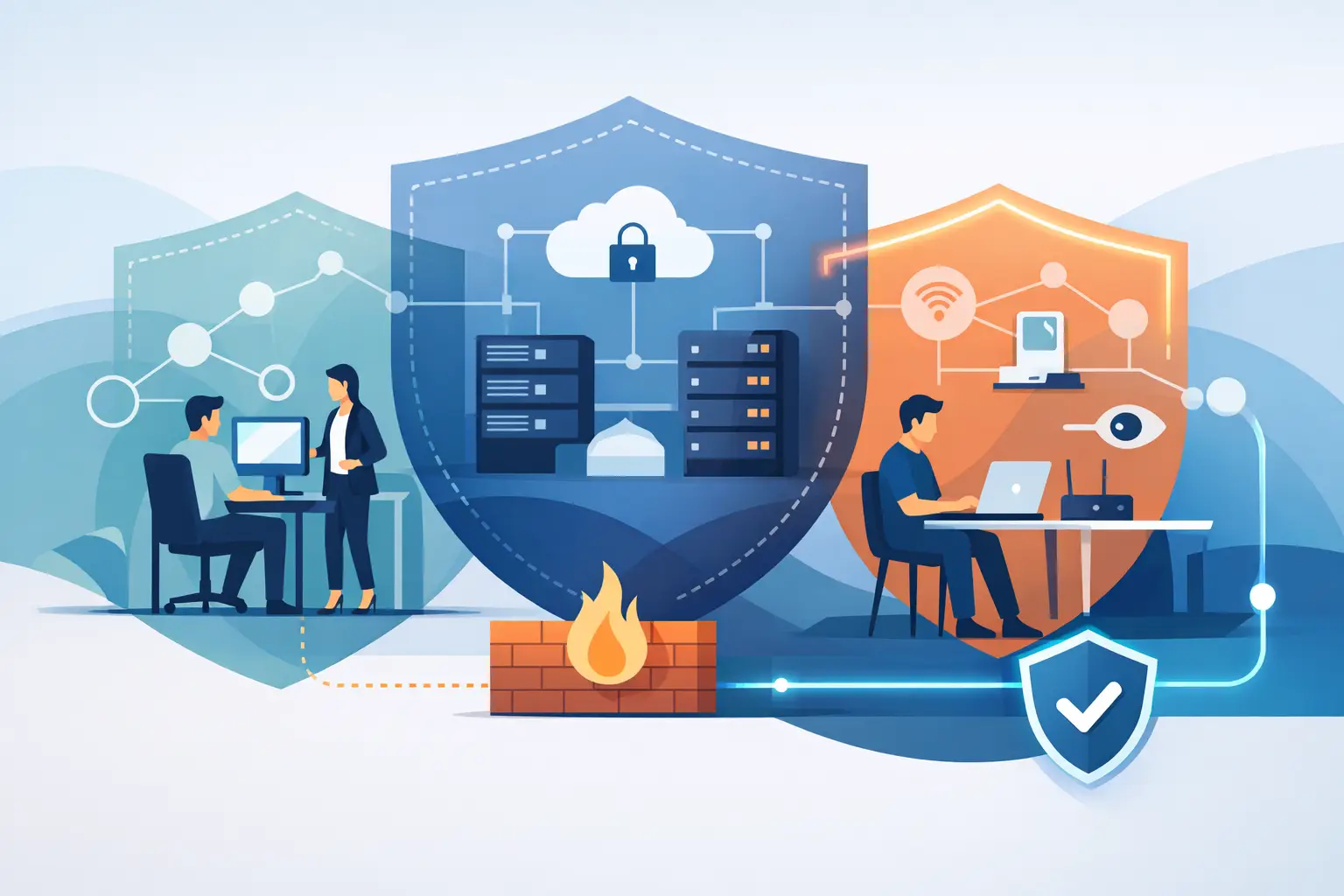
A phone system is part of the organization’s security environment. It can be exposed to unauthorized access, toll fraud, account compromise, phishing attempts, and attacks against the network itself. The risk increases when default credentials remain in place, remote administration is open to the public internet, or devices are deployed without a managed security policy.
A secure installation uses strong administrative controls, role-based access, protected management interfaces, current firmware, and network segmentation. Voice VLANs separate phone traffic from general user traffic, while firewall policies restrict unnecessary access. Where supported, encryption protects signaling and voice media in transit.
SIP trunk configuration also requires care. Calling permissions should match the needs of the business, with international or premium dialing restricted where appropriate. Fraud monitoring, usage alerts, and call limits can reduce the impact of unusual activity before it becomes a costly incident.
Recording calls creates additional responsibilities. Organizations should define why recording is required, who can access recordings, how long data is retained, and how customers are informed when necessary. Security and compliance decisions should be built into the design rather than added after the system is live.
Test before the business depends on it
An IP phone system installation should not move directly from configuration to a full office cutover. Testing in a controlled stage helps uncover issues while they are still easy to correct.
The test process should cover inbound and outbound calls, caller ID, transfers, hold and park functions, voicemail, hunt groups, after-hours routing, emergency calling, softphone access, and audio quality. Teams should test busy-hour conditions where possible, not only a single call from a quiet office. If the organization uses multiple internet connections or mobile failover, those scenarios should be tested as well.
Number porting requires particular coordination. Existing numbers should remain active until the port is confirmed, and employees need clear instructions about the changeover schedule. A phased rollout can be sensible for larger organizations, allowing one department or location to validate the setup before the remaining users transition.
Staff training should be concise and role-specific. Employees need to know how to answer, transfer, place calls on hold, check voicemail, and use their mobile or desktop application. Reception and supervisors may need additional guidance on queues, reporting, and escalation procedures. A well-configured system still underperforms if users are unsure how to use it under pressure.
Plan for support after go-live
Installation is the beginning of the service lifecycle, not the end. User changes, office moves, new departments, software updates, and provider changes all affect a phone system over time. Without clear ownership, small issues accumulate into inconsistent call routing, outdated directories, and security gaps.
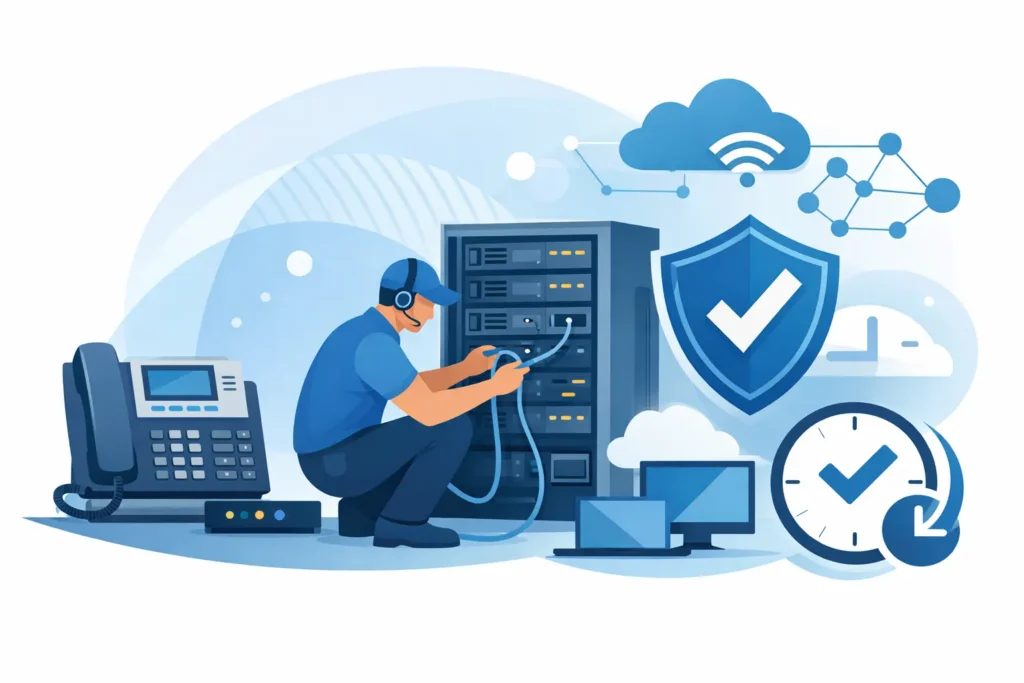
Ongoing monitoring and responsive support are especially valuable when communications are business-critical. A managed partner can review call quality, maintain device and platform updates, manage user additions, adjust call flows, and investigate issues across the network, internet connection, PBX, and SIP provider. This full-stack view is often faster than asking several vendors to determine where a fault originated.
INSOURCE UAE approaches IP telephony as part of the wider technology infrastructure, connecting phones with secure networking, WiFi, cloud services, and ongoing technical support. That perspective helps reduce disruption because the communications system is designed alongside the systems it depends on.
Know when to modernize an existing system
An organization does not always need to replace every component at once. If the existing system supports current security standards, integrates with required services, and has capacity for growth, a staged upgrade may be practical. Businesses can introduce softphones, modern SIP services, improved switching, or new call routing while retaining selected hardware temporarily.
Replacement becomes more urgent when the current platform is no longer supported, call quality is consistently poor, administration depends on a single individual, or remote users rely on personal mobile numbers. A system that cannot provide reporting, secure access, or reliable failover may also create a larger operational risk than its apparent cost savings justify.
The best next step is to map the calls your business cannot afford to miss, then build the technology and support plan around protecting them.